 Deutsch
 Français
 Italiano
 Nederlands
 Spanish

How tourist tax automation works for short-term rental hosts
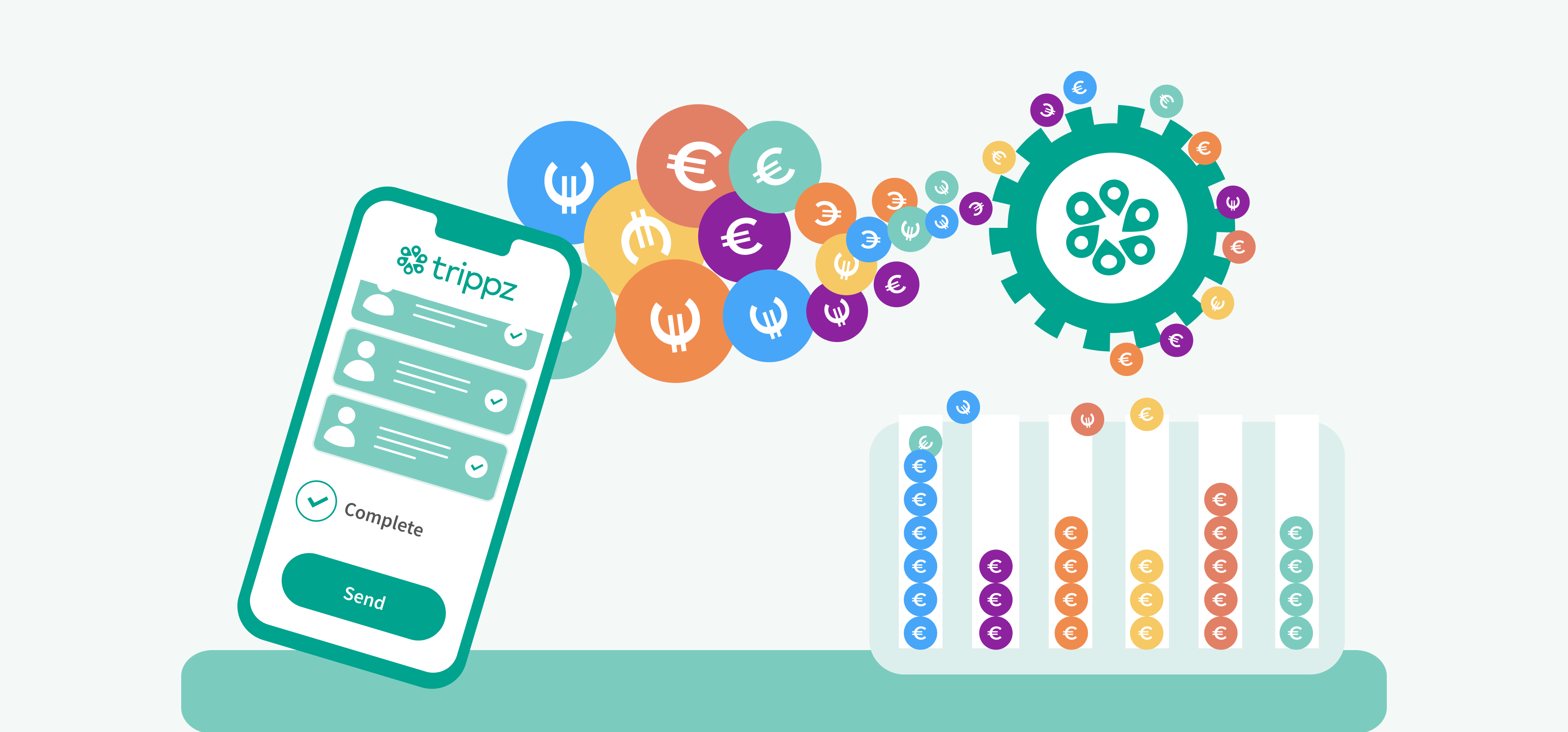
Tourist tax automation removes the manual work of charging, tracking, and accounting for tourist tax across your properties, while you stay the legally responsible party throughout. Trippz does this by maintaining and automatically updating the rates for 70+ countries, applying the correct rate to each booking, collecting the tax from the guest, and paying it out to you each month with the records you need to forward it to the local authority. When a city revises its rate mid-year, the amount you charge changes with it, without you touching a setting.
When does manual tourist tax collection start to break?
One property in one city is manageable by hand. You collect a set amount per guest per night and pay the municipality on the schedule it sets. The work grows with every variable you add. A second property in another municipality has its own rate and its own exemption rules. Bookings arrive through Airbnb, Booking.com, and your direct channel, and Airbnb collects the tax for you in some cities but not others. A rate change you never heard about can leave you charging the wrong amount for months. At that scale, a manual spreadsheet is where the errors start.
How does Trippz know the correct rate for your property?
Tourist tax rates change often. A municipality can raise its rate, set a different rate for short-term rentals than for hotels, charge per person per night instead of a flat nightly amount, or vary the rate by season. Trippz maintains a rate database across 70+ countries and updates it as municipalities publish changes. You connect a property by its address, and Trippz applies the rate that belongs to that location. When the rate changes, the update reaches your account on its own, so the amount you charge stays current.
This is where a PMS rate field falls short. It holds whatever number you entered at setup and keeps holding it until you notice a change and update it yourself. The same applies to check-in tools like Chekin, where you configure your own rate and carry the update work when a municipality changes it, and where each tax transaction adds a fee of 1.5% plus €0.99 on top of the subscription. A maintained rate database does the tracking for you.
Rules also differ sharply by country. Trippz publishes the current picture for Italy, Spain, and Germany, among the 70+ countries it covers.
How are exemptions handled?
Most tourist tax schemes exempt some guests. Children below a certain age are common, as are stays beyond a set number of nights, and in some places residents or business travellers. The age threshold and the night threshold both vary by municipality, so the same booking can be fully taxable in one city and partly exempt in another. Trippz maintains these exemption rules alongside the rate for each location, so the rules that apply to your property sit in the same place as the rate itself, instead of in your head or a spreadsheet.
How does collection work across Airbnb, Booking.com, and direct bookings?
Airbnb collects tourist tax for hosts in the cities where it has an agreement with the local authority, and in those cities it pays that tax over itself. For every booking where no platform collects the tax on your behalf, the responsibility is yours. That covers Airbnb bookings in cities without an agreement, your direct bookings, and bookings from other channels depending on the arrangements each channel has in your city. Trippz connects to your booking channels through your property management system, whether that is Smoobu, Lodgify, or Guesty, and reads your reservations from there. Where a platform is already collecting, Trippz leaves that booking alone so the guest pays once. Where the tax is your responsibility, Trippz collects it from the guest.
Who actually pays the money to the municipality?
You do. In the host flow, Trippz collects the tourist tax from your guests and pays it out to you once a month, with a breakdown by property and period. You then forward it to the local authority on its schedule, together with any declaration the municipality asks for. Trippz prepares the figures. The payment to the municipality is yours to make.
Guest registration works differently. There Trippz connects straight to the authority systems and submits the guest data for you, within the deadlines those systems enforce. In Italy, for example, guest details must reach Alloggiati Web within 24 hours of check-in, and in Spain the same submission runs through SES Hospedajes. Tourist tax money always runs back to you first.
What does tourist tax automation not cover?
Automation handles the calculation, the collection, and the records. Filing the payment with the municipality stays with you, because the money is paid out to you to forward. Automation also has no say in whether your property is licensed to operate as a short-term rental where you are. Licensing is a separate obligation, and a tool that collects tourist tax does not grant or replace it. Knowing where that line sits keeps you from assuming a system covers more than it does.
What does it cost to automate?
Trippz runs on a flat price. The base account is free, and each service you switch on costs €4 per month per property, with guest registration, tourist tax collection, and ID verification priced the same way. One property running guest registration and tourist tax collection costs €8 per month. Three properties running tourist tax collection only cost €12 per month, whether they host six bookings a month or sixty, because your subscription cost never changes with volume. Tourist tax collection carries a flat €1 transaction fee, added to the guest's payment rather than billed to you, so your own monthly cost stays the same regardless of how many bookings you take. The first month is free.
What does automation take off your plate?
Set it up once, and the rate for each property stays correct without you tracking municipal announcements. The right amount is collected from each guest, across Airbnb, Booking.com, and direct bookings, and never twice where a platform already collects. Your collected tax arrives monthly with the breakdown you need to pay the municipality. Two jobs stay yours by law: forwarding the payment, and holding the licence to operate. Everything that feeds those two jobs happens on its own.
See how Trippz keeps your tourist tax correct across every property, and start your first month free