
 Deutsch
 Français
 Italiano
 Nederlands
 Spanish
Tourist tax and guest registration in Finland A complete guide
Famous for its northern lights, serene wilderness, and cutting-edge design, Finland offers a unique mix of adventure and tranquility. Our tax guides provide up-to-date information on tourist taxes and guest registration, so you can stay informed about the latest regulations in Finland.

Is there a tax on tourism in Finland?
Currently, there is no tourist tax in Finland. Unlike many other European countries, Finland has not yet introduced a nationwide or local tourist tax for overnight stays.
That said, this may change. The Finnish Ministry of Finance has launched a public consultation to explore whether a tourist tax (matkailijavero) could be introduced in the future. The consultation invites municipalities, industry stakeholders, and the public to share their views on whether such a tax is desirable, how it could be designed, and what its potential impact on tourism and local communities would be. At this stage, no decisions have been made, and no concrete proposal or timeline exists. We will update this guide if Finland moves from consultation to legislation.
For hosts
Guest registration in Finland
When you are a host - or accommodation provider – in Finland, you are obliged through the Finnish Act on Accommodation and Catering Services to register personal details of your guests.

Registration on a passenger card in Finland
On the “passenger card”, the following details of the guest have to be registered:
- Full name
- If Finnish: personal identity code
- Date of birth
- Nationality
- Residential address
- Arrival and departure dates
- Travel document number (if not a Nordic citizen)
When filled in, the guest has to confirm the registered details with a signature.
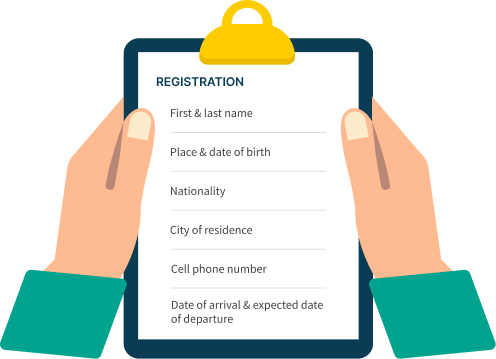
Guest registration of children in Finland
Children do not have to sign a passenger card individually. Instead, the group leader is allowed to sign a card on behalf of the group.
Submission of the guest registration to the police
The operator of accommodation services must, without delay, submit the information on foreigners to the police department in whose area the operator's accommodation business is located.
Storing of guest registration in Finland
As an accommodation provider, it is obliged to store the personal details of your guests for one year. After this period, the administration must be deleted securely.
Constant monitoring of developments in Finland
Although there is no form of tourist tax in Finland, we are closely monitoring all developments that can lead to a new tax to be introduced. Other countries in Europe, like The Netherlands, Switzerland, and Italy do levy tourist tax. Will Finland follow soon?
Frequently asked questions from hosts
-
Do I need to register my guests in Finland?
Yes! As a host or accommodation provider in Finland, you’re legally required to register guest details under the Finnish Act on Accommodation and Catering Services. This applies to all types of accommodations, from hotels to short-term rentals.
-
What guest details am I required to collect?
You need to record specific guest details on a passenger card, including:
• Full name and Finnish personal identity code (or date of birth & nationality if unavailable)
• Address
• Country of arrival
• Travel document number
• Arrival and departure dates
If guests are traveling with a spouse or children, their details must also be included. -
How long do I need to keep guest registration records?
You must store guest records securely for one year. After that, they must be deleted in line with data protection laws.
-
Do I need to report guest details to authorities?
Yes, but only for foreign guests. You must submit their details without delay to the local police department where your accommodation is located.
-
Do I need to charge my guests a tourist tax in Finland?
No. Unlike many European countries, Finland does not currently have a tourist tax. However, regulations can change, and we’re keeping a close eye on any developments.
Trippz: the authority on tourist tax
Tourist tax is set locally and rates change without warning. Trippz tracks every change and keeps the data current, which is why travel platforms and property software, including Airbnb, Booking.com and Expedia, rely on Trippz to calculate tourist tax and register guests in every market they serve.
How Trippz stays current
Trippz checks tax rules jurisdiction by jurisdiction against official municipal and national sources. When a rate or rule changes, the update happens automatically rather than on a periodic review cycle. This is the same monitoring that travel platforms and software vendors depend on to stay accurate everywhere they operate.

One tax engine, every market
Send a location, get the applicable rate, instantly and correctly calculated. Travel platforms and property software embed this calculation directly into their own product, so every booking is taxed correctly without building or maintaining a rate engine in house. It is the same logic behind every rate on this page.

Frequently asked questions about Trippz
-
How can platforms and software vendors use Trippz?
Trippz provides tourist tax content and a ready made calculation engine through one API. Platforms and software vendors add accurate tax calculation to their product without maintaining a rate database in house. Guest registration and authority connections are available as a separate capability for those who need it.
-
How does Trippz keep tourist tax rates current?
Trippz checks the jurisdictions it covers against official sources and updates rates automatically when a city or country changes them.
-
Which countries and cities does Trippz cover?
Trippz maintains tourist tax data across a wide range of countries and cities. See the full overview in our tourist tax guides.
-
Is Trippz's data and infrastructure secure?
Yes. Trippz is SOC1 Type 2 and SOC2 Type 2 certified and GDPR compliant, so platforms and software vendors can embed tourist tax calculation without adding security or compliance risk of their own.
-
Who uses Trippz for tourist tax?
Trippz provides tourist tax data and calculation to travel platforms and property software across Europe, including Airbnb, Booking.com and Expedia. The same infrastructure that powers stays booked through the biggest platforms in travel is available to any platform or software vendor through the API.
municipality