
 Deutsch
 Français
 Italiano
 Nederlands
 Spanish
Tourist tax in Liechtenstein A complete guide
Liechtenstein sits between Switzerland and Austria and is famous for its Alpine views, fairy-tale castles, and vibrant mix of old and new. In our tax guide, you’ll find everything you need to know about Liechtenstein’s tourist tax, from current rates and who pays to compliance tips and how to keep things hassle-free. With Trippz, managing your obligations is automated and simple, so you can focus on what truly matters: welcoming guests to this Alpine gem.

Is there a tourist tax in Liechtenstein?
Liechtenstein has a national tourist tax called the “Kurtaxe,” a fixed fee per person, per night for all paid accommodation, set by each municipality. Children under 15 and guests in Liechtenstein Alpine Club huts are exempt. Hosts are required by law to register guests, collect the tax, and remit it to local authorities, supporting tourism and community services. Trippz makes compliance easy with full automation of registration, calculation, and payment.
For tourists
Why is there a tourist tax in Liechtenstein?
Liechtenstein’s tourist tax (Kurtaxe) helps maintain and enhance the guest experience by supporting local services, tourism promotion, and the stunning natural environment. Revenue from the tax directly funds infrastructure, community facilities, and sustainability efforts, preserving mountain trails, cultural attractions, and ensuring the principality remains a welcoming destination for visitors year-round.
Rate of the tourist tax in Liechtenstein
Anyone staying overnight in paid accommodation, regardless of citizenship or place of residence, is considered a tourist and required to pay the Kurtaxe. The amount is a fixed rate set by the local municipality, varying by accommodation types. The rate is per person per night. Children under 15 and guests in Liechtenstein Alpine Club huts are exempt. Rates can slightly vary by town, so always check with your host or the municipal website for the exact amount.
| Accommodation type | Tourist tax rate |
|---|---|
| Hotels, inns, guesthouses and educational establishments | 3.50 CHF |
| Holiday homes, flats and rooms | 2.50 CHF |
| Youth hostels, dormitories, tents, caravans and mobile homes on campsites | 1.50 CHF |
Frequently asked questions from tourists
-
Do I have to pay a tourist tax when staying in Liechtenstein?
Yes, all visitors staying in paid accommodations in Liechtenstein must pay a tourist tax, officially known as the Kurtaxe. This tax applies to overnight stays at hotels, guesthouses, apartments, and private rentals, regardless of nationality or place of residence.
-
How much is the tourist tax in Liechtenstein?
The Kurtaxe is a fixed fee per person per night varies according to accommodation type. It is not a percentage of the accommodation cost, and the exact amount may vary slightly depending on where you stay.
-
Do children have to pay the tourist tax in Liechtenstein?
Children under 15 are exempt from the Kurtaxe, as are guests staying in Liechtenstein Alpine Club huts.
-
Is the tourist tax included in the price of my accommodation?
This depends on your host. Some accommodations may incorporate the Kurtaxe into the total booking price, while others list it separately at checkout. Always confirm with your provider.
-
What is the tourist tax used for in Liechtenstein?
Revenue from the Kurtaxe supports local tourism services, infrastructure, and community facilities, maintaining hiking trails, funding visitor centres, and promoting sustainable tourism to ensure Liechtenstein remains a truly welcoming Alpine destination.
-
What is the tourist tax for long-term stays in Liechtenstein?
For long-term tenancies lasting six months, Liechtenstein charges a flat-rate tourist tax instead of the daily rate. The amount depends on your accommodation type:
- Holiday homes, apartments, and rooms: CHF 150 for a six-month period
- Pitches for tents, caravans, and motorhomes on campsites: CHF 25 for a six-month period
For hosts
Guest registration in Liechtenstein
Guest registration in Liechtenstein is governed by municipal statutes in connection with the national registration and tourist tax (Kurtaxe) system. All guests, regardless of nationality, must be registered with the relevant local authorities during their stay in any paid accommodation, as part of the country’s commitment to transparent and sustainable tourism management.
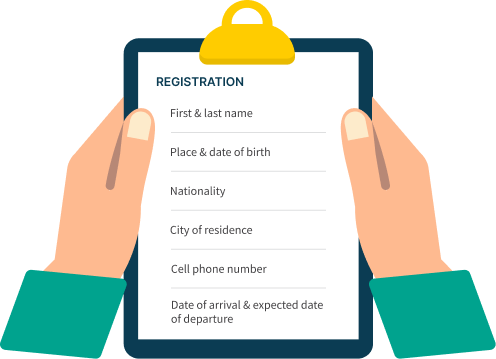
Guest registration details in Liechtenstein
Hosts are required to collect and register the following details for every guest:
- Full name
- Date of birth
- Nationality
- Dates of arrival and departure
Guests must show valid ID, such as a passport or national identification card, for verification and compliance with registration rules.
Submission of the guest registration to the authorities in Liechtenstein
Accommodation providers must promptly and securely submit guest data to the municipal authorities, either through digital platforms provided by the municipality or, in some cases, via paper forms. This process enables correct calculation of the Kurtaxe and supports local tourism infrastructure.
Storing of guest registration in Liechtenstein
All guest registration data must be retained for the period stipulated by local regulations (typically at least 1 year) in line with Liechtenstein’s data protection laws. Storage and handling of guest information must comply with national data privacy requirements, ensuring information security and lawful processing at all times.
Handling of tourist tax
-
Remittance of tourist tax
In Liechtenstein, hosts are responsible for collecting and remitting the tourist tax, known as the Kurtaxe, to their local municipality. The Kurtaxe must be reported and paid at the intervals specified by the municipality (often monthly or quarterly). Accommodation providers are required to submit accurate declarations of the amounts collected, register all guests, and ensure timely remittance to avoid administrative penalties or fines.
-
Storing your administration for tourist tax
Hosts must keep comprehensive records related to the Kurtaxe, including guest information, amounts collected, and data for each declaration made to local authorities. These records should be maintained for at least 10 years in compliance with Liechtenstein’s tax and data protection laws, and must be kept available for audit or inspection as required.
-
Tourist tax when renting through an online booking platform
When renting through platforms like Airbnb or Booking.com, accommodation providers in Liechtenstein remain fully responsible for collecting the Kurtaxe. The tax must be collected from guests either at booking or upon arrival, depending on the platform’s system. Ultimate responsibility for compliance, accurate registration, and remittance always lies with the accommodation provider.
Don’t want to worry about remitting the correct amount of tourist tax? That’s possible, with the use of Trippz!
-
Short-term rental registration requirements
In Liechtenstein, owners of short-term rental properties must register their accommodation with the municipal authority before hosting guests. Each property is assigned a unique registration number, which must be included in all online listings, for example on platforms like Airbnb or Booking.com, and at the property itself. The accommodation must comply with local quality and safety standards, ensuring essentials like beds, bathrooms, smoke detectors, and fire safety equipment are provided as required by municipal regulations. Hosts must also follow zoning and building codes established by the community. Non-compliance can result in fines or the removal of property listings. These requirements support transparency and a robust legal framework for tourist rentals in Liechtenstein, as outlined under the national registration and tourism tax system and recent EU regulation 2024/1028.
-
VAT on short-term rentals in Liechtenstein
If you offer short-term rentals in Liechtenstein, these are generally considered a commercial activity and are subject to Value Added Tax (VAT). The standard VAT rate in Liechtenstein is 8.1% as of 2025. Providers of short-term accommodation, including those letting through platforms like Airbnb or Booking.com, must register for VAT with the Steuerverwaltung (Tax Administration) if their annual turnover exceeds the applicable threshold (currently CHF 100,000). Registered hosts must issue invoices including VAT, submit periodic VAT returns (typically quarterly), and keep accurate records of all relevant transactions. VAT returns and payments are filed via the official tax portal, and compliance with local record-keeping and reporting rules is essential. Note: Long-term residential lettings are VAT-exempt in Liechtenstein. Always consult the Fiscal Authority, Government of Liechtenstein for current rates and obligations.

Frequently asked questions from hosts
-
Do I need to register my short-term rental property in Liechtenstein?
Yes, all short-term rental properties must be registered with the local municipality before you begin hosting guests. Upon registration, your property receives an official registration or permit number. This number must be included in all online listings (such as Airbnb or Booking.com) and displayed at the property as required by municipal rules.
-
What information do I need to collect from guests staying in my accommodation?
You are required to collect each guest’s full name, date of birth, nationality, and dates of stay. Each guest must present valid identification (such as a passport or national ID). All guest details must be entered into the guest register and submitted to the municipality in accordance with official procedures.
-
Are there any differences in the registration process for Liechtenstein and foreign guests?
No, the registration process is identical for all guests, regardless of nationality. Every guest must provide identification, and their details are registered with the municipality.
-
How long do I need to store the guest registration records?
Hosts must store guest registration records securely for at least one year, in accordance with data protection and municipal regulations. This ensures information is available for any required inspections or audits and complies with Liechtenstein’s privacy requirements.
-
What are the penalties if I don’t register my short-term rental property?
Failure to register your property or comply with local guest registration and reporting obligations can result in administrative fines and, in certain cases, suspension of your hosting permit. Each municipality sets its own penalty framework, so always check with your local authority for current rules and enforcement policies.
Trippz: the authority on tourist tax
Tourist tax is set locally and rates change without warning. Trippz tracks every change and keeps the data current, which is why travel platforms and property software, including Airbnb, Booking.com and Expedia, rely on Trippz to calculate tourist tax and register guests in every market they serve.
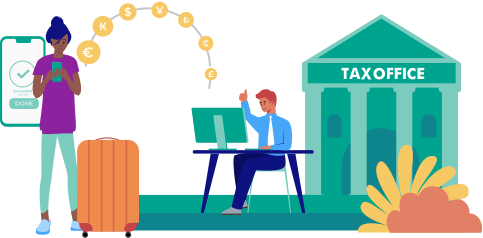
How Trippz stays current
Trippz checks tax rules jurisdiction by jurisdiction against official municipal and national sources. When a rate or rule changes, the update happens automatically rather than on a periodic review cycle. This is the same monitoring that travel platforms and software vendors depend on to stay accurate everywhere they operate.
One tax engine, every market
Send a location, get the applicable rate, instantly and correctly calculated. Travel platforms and property software embed this calculation directly into their own product, so every booking is taxed correctly without building or maintaining a rate engine in house. It is the same logic behind every rate on this page.

Frequently asked questions about Trippz
-
How can platforms and software vendors use Trippz?
Trippz provides tourist tax content and a ready made calculation engine through one API. Platforms and software vendors add accurate tax calculation to their product without maintaining a rate database in house. Guest registration and authority connections are available as a separate capability for those who need it.
-
How does Trippz keep tourist tax rates current?
Trippz checks the jurisdictions it covers against official sources and updates rates automatically when a city or country changes them.
-
Which countries and cities does Trippz cover?
Trippz maintains tourist tax data across a wide range of countries and cities. See the full overview in our tourist tax guides.
-
Is Trippz's data and infrastructure secure?
Yes. Trippz is SOC1 Type 2 and SOC2 Type 2 certified and GDPR compliant, so platforms and software vendors can embed tourist tax calculation without adding security or compliance risk of their own.
-
Who uses Trippz for tourist tax?
Trippz provides tourist tax data and calculation to travel platforms and property software across Europe, including Airbnb, Booking.com and Expedia. The same infrastructure that powers stays booked through the biggest platforms in travel is available to any platform or software vendor through the API.
municipality