
 Deutsch
 Français
 Italiano
 Nederlands
 Spanish
Tourist tax in Slovenia A complete guide
Slovenia welcomes visitors with vibrant destinations, rich culture, and unforgettable experiences. To keep these destinations thriving, a tourist tax applies in most places, supporting local infrastructure, tourism, and quality of life for everyone.
Why do municipalities in Slovenia levy tourist taxes?
Cities and towns in Slovenia collect a tourist tax because visitors use extra public facilities and services, from tourism infrastructure and local events to promotional activities through the Slovenian Tourist Board. The tax helps maintain a fair balance between tourists and residents, ensuring sustainable tourism development.
Tourist tax by municipality in Slovenia
Each Slovenian municipality decides independently whether to impose a tourist tax, its rules, and the rate charged, as regulated by the Promotion of Tourism Development Act (ZSRT-1). This means even Slovenian citizens may pay the tax if staying in a municipality where they don't reside. There's no national rate, and systems vary by local regulations.
Is the municipality you are looking for not listed? Let us know, and we'll send you more information.

- Ljubljana
- Piran
- Bled
- Kranjska Gora
- Bohinj
- Brežice
- Bovec
- Izola
- Maribor
- Moravske Toplice
- Radovljica
- Podčetrtek
How do we know all this? Because we are helping hosts and platforms across the world!
For tourists
When is tourist tax payable in Slovenia?
Tourist tax applies for every overnight stay at hotels, hostels, campsites, holiday apartments, and other accommodations in Slovenian municipalities that levy it. This includes Slovenian citizens staying outside their permanent residence.
The amount and collection method vary by municipality. Always a flat fee, with reductions available for children and specific accommodation types.

Who is exempt from the tourist tax?
Exemptions vary by municipality in Slovenia. Everyone typically pays the tax.
Common reductions apply to:
- Children aged 7-18
- Guests in IYHF youth hostels
- Campers
Always check current rules with your accommodation or local tourism office.
The structure of tourist taxes in Slovenia
In Slovenia, the tourist tax is organised and administered entirely at the local municipal level under the Promotion of Tourism Development Act (ZSRT-1). Every municipality decides if and how they levy a tourist tax. This leads to a diverse and flexible system.
The amount of tourist tax is set by each municipality and can vary significantly, depending on the municipality, the type of accommodation, and occasionally the season.
Here are the main aspects:
Tourist tax at the municipal level
- Each municipality sets its own rules, rates, and collection period.
Some charge a flat rate per guest per night (most common). - Municipal councils also decide who is exempt, any applicable caps, and the frequency of returns and payments.
No regional or national coordination
- There is no harmonisation or framework at the regional or national level
- No region-wide or country-wide rate, and no centralised forms.
- Processes are handled entirely locally.
Additional fees or contributions
In Slovenia, a promotional tax (25% of the tourist tax) applies nationwide and supports the Slovenian Tourist Board. This is collected alongside the main tourist tax and must be clearly shown to guests.
What are the benefits of a tourist tax for tourists?
- Enhanced visitor experience: Revenue from the tourist tax helps fund services that directly benefit guests, think well-maintained tourist information centers, city maps, digital guides, and friendly support for travelers.
- Vibrant city life and culture: Your contribution supports local festivals, exhibitions, and cultural activities, making Slovenia's destinations lively, creative, and welcoming places to explore.
- Better local infrastructure: The tax helps pay for clean streets, lighting, parks, safe public spaces, and accessible pedestrian routes, everything needed for memorable strolls and easy sightseeing.
- Sustainable tourism development: Funds also support sustainability efforts, like eco-friendly initiatives, bicycle schemes, or improved public transport for all.
Your tax helps keep Slovenia open, clean, and welcoming, so every visitor enjoys the best this country has to offer.
Payment and administration
- Revenue management: Tourist tax collected by hotels, hosts, and accommodation providers is forwarded directly to the local municipal administration by the 25th of the following month, as each municipality manages its own funds. The promotional tax (25% of tourist tax) goes to the Slovenian Tourist Board.
- Transparency and accountability: Slovenian municipalities are responsible for ensuring tourist tax revenue is spent transparently on tourism development, often reporting how it benefits both visitors and the local community, whether through improved services, cleaner streets, or cultural events. The goal: for everyone to see the positive impact of their contribution.
- Local decision-making: Because there is no national or regional standard beyond ZSRT-1, each municipality can adapt tourist tax processes to fit their special character, needs, and priorities. This flexibility makes the system uniquely responsive, though it means hosts and guests must always check local rules.
- Host obligations: Accommodation providers are required to keep up to date with the regulations in the municipality where the property is located. They must collect, report via eTurizem, and pay the correct amount, submit returns on time, and maintain accurate records for 5 years in case of audits.
- Trends and changes: Over recent years, several Slovenian municipalities have updated their rates and rules, sometimes in response to inflation or increased tourism. Some are moving towards clearer reporting of tax spending and simpler digital payment systems to make compliance easier for all involved.
Development of tourist taxes in Slovenia
Over recent years, tourist tax rates in Slovenia have gradually increased in several major municipalities. This is often due to rising inflation, the growing need to maintain or expand tourism services, and changes in visitor numbers. Municipalities may review their rates and rules regularly, sometimes introducing new exemptions, or clearer breakdowns of how the tax is spent. There is also a broader push for greater transparency and simplicity, with more municipalities offering digital reporting via eTurizem to make compliance easier for both guests and hosts.
Frequently asked questions from tourists
-
Am I, as a guest, responsible for properly remitting the tourist tax?
No. Accommodation providers (hotels, apartments, etc.) are responsible for collecting and forwarding the tourist tax to the municipality. As a guest, you simply pay the provider as part of your stay. Always check your booking details to see if the tax is included or will be paid on-site.
-
At what point do I have to pay the tourist tax?
Usually, the tourist tax is paid:
- At check-in or check-out, as part of your final bill.
- When booking via online platforms like Airbnb or Booking.com, it may be included in your total price; if so, you pay the tax upfront.
Occasionally, especially with small hosts, you may be asked to pay in person during your stay.
Check your booking confirmation to know when and how you'll be charged. -
Do I have to pay the tourist tax in cash?
Not usually. In most places, you can pay the tourist tax using your usual payment method (credit/debit card or digital payment). Some smaller or private rentals might prefer cash, if you're not sure, confirm the payment process with your host in advance.
-
Do I need to register upon arrival at my accommodation? Is this mandatory?
Yes. Registration is standard practice and required by law in Slovenia. You'll be asked to provide personal information (like name, ID/passport details, date of birth, nationality, and address) on arrival, either on paper or electronically via eTurizem. This helps the accommodation provider comply with local regulations and calculate the correct tourist tax. Failing to register may cause issues with your stay.
-
Can the hotel make a copy of my passport for registration?
Hotels and hosts in Slovenia may check your identity documents (ID or passport) for registration. Making a photocopy is allowed for legal compliance, but providers should handle your data securely and in accordance with Slovenian privacy laws. If you're concerned about how your data is handled, you're entitled to ask the provider how long it will be kept and how it is secured.
-
I cancelled my booking. Do I still have to pay tourist tax?
No. If you cancel your stay according to the accommodation's policy and do not use the property, tourist tax is not charged. Tourist tax only applies for nights actually spent at the accommodation. If you were mistakenly charged, contact the provider for clarification or a refund.
-
I’m asked to pay tourist tax at the hotel, but I already paid when booking. What should I do?
- Check your booking confirmation or receipt to see if the tourist tax is included or listed as a separate line.
- Show proof of payment to the hotel staff to avoid paying twice.
- If there's a disagreement, ask the provider to confirm with the booking platform, as sometimes information on payment can be slow to reach the hotel.
If needed, contact the customer service of the booking platform for assistance. Resolve by showing documentation usually clears up the issue.
Tip: Always keep your booking confirmation and payment proof handy when you travel, just in case.
-
May the hotel where I am staying make a copy of my passport for guest registration in Slovenia?
Yes, hotels and other accommodation providers in Slovenia may ask to see your identity document (passport, ID card, or residence permit) during check-in to confirm your identity and complete mandatory guest registration.
- Verification: Providers are required by law to verify guest identity, which is typically done by checking your ID or passport.
- Copying: Making a photocopy is allowed and sometimes done for security and registration purposes, but not strictly required by law. The accommodation must treat your data with care.
- Data protection: Slovenian privacy laws require that your personal data and any copies are stored securely, used only for legal purposes, and not retained longer than necessary. You can ask how your data or any copies will be stored, used, or destroyed after your stay.
If you're concerned, you're entitled to ask the provider about their privacy practices and request that unnecessary copies are destroyed after your departure.
-
Upon arrival at the hotel, I am asked to pay tourist tax. But surely I have already done this through the booking platform?
If you're asked to pay tourist tax at your hotel in Slovenia but already paid it via the booking platform:
- Check Your Booking Confirmation: Review your booking confirmation or receipt If you're asked to pay tourist tax at your hotel in Slovenia but already paid it via the booking platform.
- Don't pay twice! First, check your booking confirmation or payment receipt, tourist tax may appear as a separate item or be included in the total price.
- Show proof: Present your receipt or confirmation to the hotel staff to demonstrate you've already paid.
- Clarify: If there's still confusion, politely ask the hotel to verify whether the tax has already been collected by the platform. Sometimes payment details are not communicated instantly to the property.
Still unresolved? Contact customer service at the booking platform; they can confirm and resolve payment details directly with the accommodation. Most issues are sorted quickly by showing documentation, so always keep your booking proof handy!
For hosts
Renting out in Slovenia: what you need to know
If you host tourists in Slovenia, there are a few essentials to keep in mind. You'll need to register your accommodation in RNO, use eTurizem for guest registration, and collect and remit the tourist tax to your municipality.
This may feel complex, but Trippz is here to make it simple!

Obligations of the Host
If you rent out accommodation to tourists, the Slovenian system expects you to:
- Collect the tourist tax: It's your legal duty to charge the correct tourist tax from guests and pay it to the local municipality.
- Know your rate: The tax amount varies by municipality and accommodation type. Always check with your local tourism service for the latest rates.
Keep records and invoicing: You must accurately record tourist taxes collected and report/pay them according to your municipality's requirements, usually via eTurizem and municipal forms. - Inform your guests: Make sure your guests know about the tourist tax, show this on your booking listing or let them know at check in. The tourist tax is usually charged in addition to the accommodation price.
- Explain the benefits: Let guests know the tax supports local services, events, and infrastructure, a good story leads to better acceptance!.
Register your guests: Slovenian authorities require hosts to register guests via eTurizem. You'll need to report info like name, passport, dates, and total guest numbers for accurate tax calculation. - Tax handling: Tourist taxes collected are not counted as your personal revenue, they are passed directly to the municipality and STO. Still, check local rules to stay fully compliant.
- Be inspection ready: Municipal authorities may audit your compliance. Non compliance can result in fines.
Guest Registration in Slovenia
In Slovenia, hotels and other tourist accommodations are legally obliged to register their guests. This obligation comes from ZPPreb-1 (Guest Registration Act) and ZSRT-1, and is enforced by AJPES, police, and municipalities.
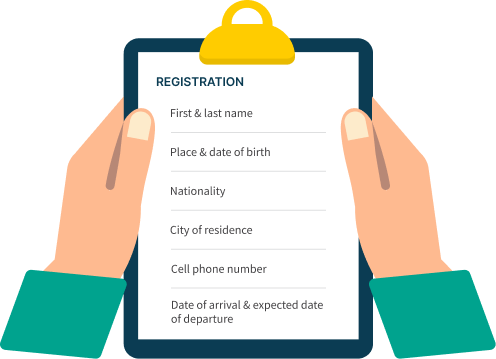
If you rent to tourists and collect tourist tax, you need to record specific information about each main booker, including:
- Full name
- Home address
- Date of birth
- Nationality
- Passport/ID number
You'll also keep track of:
- Arrival and departure dates
- Total number of guests (including children)
This data is generally logged via the eTurizem electronic registration portal (AJPES) and submitted automatically to authorities. Make sure you safeguard guest information at all times.
How long to keep guest records?
Slovenian law (ZPPreb-1) requires you to store guest registration data for 1 year from the previous year. Tax records must be kept for 5 years. This allows for municipal audits if needed. Check the details: Retention periods and obligations can differ by municipality, always verify with your municipality for exact rules.
Data protection
During the retention period, you are legally required to keep all guest data secure, confidential, and protected from unauthorized access. When the period ends, securely destroy any physical or electronic records.
Storing records: Electronic or paper, both are valid
You may store records and guest data either digitally or in paper form. What matters is secure access and compliance with Slovenian privacy law. Be ready to produce these if authorities request an inspection.
Do you rent to tourists in Slovenia? If so, it is important to understand what is coming your way. You will have to register your accommodation in RNO, keep guest registration via eTurizem, and collect and remit tourist tax. This can seem complex and overwhelming.
Fortunately, we are here to help you get started!
Responsibilities as a host in Slovenia
Collecting the tax: As a host, you're required by law to charge the correct tourist tax from guests and pay it to your local municipality.
- Know your local rate: Tourist tax rates and rules differ by municipality and accommodation type. Always check with your municipal tourism authority for up-to-date amounts.
- Accurate records and payments: You'll need to register every stay via eTurizem and accurately keep track of all tourist taxes collected, using municipal forms. Make sure your remittances are regular and on time.
- Being transparent with guests: Clearly inform guests about the tourist tax, list it on the booking platform or share details on arrival. In almost all cases, it's added on top of the accommodation price.
- Show how the tax benefits everyone: Tourist tax revenue funds local services, events, facilities, and cleaner streets, so boost acceptance by sharing this positive impact with your guests.
- Guest registration: Slovenian authorities require hosts to officially register every guest via eTurizem, including personal details and stay dates. This info is used to make sure the right amount of tax is collected.
- Not part of your income: The tourist tax you collect is passed directly to the local government and isn't counted as your own income. Still, follow all local and national tax rules to stay compliant.
- Audit-ready: Local authorities may carry out checks or audits. If tourist tax isn't reported or paid correctly, you could face fines.
With Trippz, you automate, simplify, and stay confident, so you can focus on welcoming guests, not paperwork.
How to record guest data?
You can enter this information in the eTurizem portal (AJPES) - mandatory for all tourist accommodations. Always ensure guest data is stored securely and only shared with relevant local authorities when required.
Keep it secure, keep it compliant:
- All guest data must be protected according to GDPR and Slovenian privacy law.
- Destroy records securely once the legal retention period ends.
Both paper and digital storage are acceptable, just make sure your records are safe, organized, and accessible if AJPES or municipality asks for verification.
Don't want to manage all this manually? Trippz automates guest registration, reporting, and compliance, so you get peace of mind and a full, secure overview in just a few clicks.
Handling tourist tax in Slovenia
-
Remitting the tourist tax
As a host in Slovenia, you're responsible for collecting the correct tourist tax from your guests and paying it to your municipality by the 25th of the following month. Most municipalities require monthly remittance via a special municipal account.
-
Setting and collecting your rates
Tourist tax rates are set by each municipality and depend on location, accommodation type, and sometimes guest demographics or length of stay. Rates are stable but double-check if there are seasonal differences or exemptions.
If a guest leaves earlier than planned, you must refund any tourist tax paid for unused nights.
-
How does it work with booking platforms?
If your rentals are listed on platforms like Airbnb or Booking.com, these platforms may collect and remit the tourist tax for you in some municipalities. Where this isn't automated, you remain responsible for collecting and paying the tax for direct bookings or platforms that don't handle it. Always verify who is responsible, don't assume!
-
Keeping your records audit-ready
Hosts must keep clear, accurate records of all stays, showing guest names, dates, number of nights, and tourist tax collected and paid. Local authorities may audit you at any time, so it's best to organize this digitally via eTurizem and securely, records should be kept for 5 years.
Don’t want to spend hours checking your administration?
Frequently asked questions from hosts
-
Can I get fined if I don’t pay tourist tax?
Yes, failure to collect or remit the tourist tax can lead to fines up to €4,000, back payments, or legal trouble. Municipalities take non-compliance seriously.
-
Do I have to ask guests for a rating or review?
No, requesting reviews is optional. Ratings can boost your visibility but are never a legal requirement.
-
Where do I pay the tourist tax?
You pay it directly to the municipality where your accommodation is located via a special municipal account. You'll need to declare total stays and nights via eTurizem.
-
Do I need to submit guest registration details with my tax payment?
No. Guest registration via eTurizem is daily and separate from monthly tax payment to the municipality.
-
Is there a special form or system I must use?
eTurizem (AJPES) for guest registration (mandatory). Municipalities provide their own forms/accounts for tax remittance.
-
I have multiple properties, should I declare each one separately?
Yes, each RNO-registered property declared separately in eTurizem.
-
Do I pay tax on cancelled bookings?
No. Tourist tax is only due for nights that were actually spent. If a guest cancels, refund any tax you have already collected.
-
How can I make all of this easier?
Let Trippz do the work! Our platform automates tax calculations, keeps your records in one place, and integrates directly with major booking platforms, helping you achieve hassle-free compliance, every time.
Trippz: the authority on tourist tax
Tourist tax is set locally and rates change without warning. Trippz tracks every change and keeps the data current, which is why travel platforms and property software, including Airbnb, Booking.com and Expedia, rely on Trippz to calculate tourist tax and register guests in every market they serve.
How Trippz stays current
Trippz checks tax rules jurisdiction by jurisdiction against official municipal and national sources. When a rate or rule changes, the update happens automatically rather than on a periodic review cycle. This is the same monitoring that travel platforms and software vendors depend on to stay accurate everywhere they operate.
One tax engine, every market
Send a location, get the applicable rate, instantly and correctly calculated. Travel platforms and property software embed this calculation directly into their own product, so every booking is taxed correctly without building or maintaining a rate engine in house. It is the same logic behind every rate on this page.
Frequently asked questions about the use of Trippz
-
How can platforms and software vendors use Trippz?
Trippz provides tourist tax content and a ready made calculation engine through one API. Platforms and software vendors add accurate tax calculation to their product without maintaining a rate database in house. Guest registration and authority connections are available as a separate capability for those who need it.
-
How does Trippz keep tourist tax rates current?
Trippz checks the jurisdictions it covers against official sources and updates rates automatically when a city or country changes them.
-
Which countries and cities does Trippz cover?
Trippz maintains tourist tax data across a wide range of countries and cities. See the full overview in our tourist tax guides.
-
Is Trippz's data and infrastructure secure?
Yes. Trippz is SOC1 Type 2 and SOC2 Type 2 certified and GDPR compliant, so platforms and software vendors can embed tourist tax calculation without adding security or compliance risk of their own.
-
Who uses Trippz for tourist tax?
Trippz provides tourist tax data and calculation to travel platforms and property software across Europe, including Airbnb, Booking.com and Expedia. The same infrastructure that powers stays booked through the biggest platforms in travel is available to any platform or software vendor through the API.
municipality