
 Deutsch
 Français
 Italiano
 Nederlands
 Spanish
Tourist tax in Bahamas A complete guide
The Bahamas has its own rules when it comes to tourist tax. Whether you're hosting or travelling, Trippz gives you everything you need to stay on top of them.

Is there a tourist tax in the Bahamas?
The Bahamas doesn't have one single "tourist tax" label, but tourists do pay several travel-related charges. The main one is VAT (Value Added Tax), set at a flat 10% nationwide, applied to accommodation, dining, activities, and more. On top of that, there are departure taxes, port levies, and area-specific accommodation charges depending on where you stay. We break it all down so you know exactly what to expect. No surprises.
For tourists
Why is there a tourist tax in the Bahamas?
In the Bahamas, the tax tourists most often see in accommodation pricing is VAT (Value Added Tax): a consumption tax applied at the national level across goods and services. Set at a flat 10% rate nationwide, it applies to accommodation stays, dining, activities, and more. The system also includes additional levies, such as area-specific promotional charges in Nassau and Cable Beach, helping the Bahamas fund tourism infrastructure while staying competitive as a destination. Trippz captures this through the Bahamas' VAT and tourism levy regulations for accommodation stays.

What is the rate of the tourist tax in the Bahamas?
Anyone staying overnight in paid accommodation is subject to the Bahamas' VAT (Value Added Tax), which applies nationwide to all accommodation types regardless of nationality or residence status. The standard rate is a flat rate, with no reduced or zero-rate option for tourists. Properties in Nassau, Paradise Island, and Cable Beach also attract an additional promotional levy on top of VAT, bringing the effective accommodation tax rate higher in those areas.
| Accommodation Type | Stay Duration | Tax Rate |
|---|---|---|
| All accommodation types | Under 45 continuous days | 10% VAT |
| Holiday/special periods | From 45 continuous days | 0% (exemp) |
Frequently asked questions from tourists
-
Do I have to pay a tourist tax when staying in the Bahamas?
Yes. The Bahamas applies VAT (Value Added Tax) at a flat 10% rate on all paid accommodation stays under 45 continuous days. There are no exemptions based on nationality or tourist status, so all visitors pay the same rate regardless of where they're from.
-
How much is the tourist tax in the Bahamas?
The standard rate is 10% VAT on your accommodation. If you're staying in Nassau, Paradise Island, or Cable Beach, an additional promotional levy applies on top of VAT, so the effective rate is higher in those areas. Stays of 45 continuous days or more are fully exempt.
-
Do children have to pay the tourist tax in the Bahamas?
VAT on accommodation is applied to the room rate, not per person, so there is no separate child rate or exemption. What you pay depends on the nightly room cost, not the number or age of guests in the room.
-
Is the tourist tax included in the price of my accommodation?
It depends on how the property presents its pricing. Some properties advertise rates inclusive of VAT, while others add it on top at checkout. It's always worth checking before you book. Compliant properties are required to reflect the correct VAT treatment on their invoice.
-
What is the tourist tax used for in the Bahamas?
VAT revenue goes into the national government's general budget, supporting public services across the islands. The additional tourism-specific levies, such as the sustainability levy on cruise passengers, are directed toward tourism infrastructure, destination marketing, and the long-term development of the Bahamas as a competitive travel destination.
For hosts
Guest registration in the Bahamas
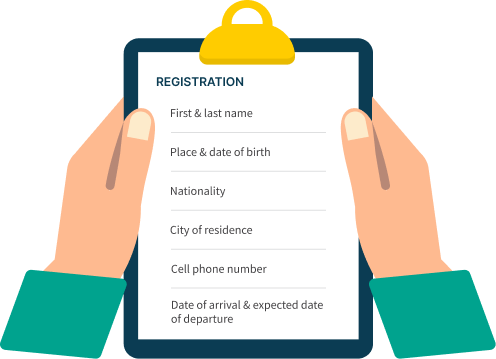
Guest registration in the Bahamas is governed through tourism and immigration regulations and requires hosts to keep an accurate guest record as part of staying compliant. For short-term rental hosts, you must record core guest details such as the guest's name, length of stay, number of guests, and contact information, and keep this on file, making it available to the relevant authority if requested. This supports transparency, safety, and licensing compliance. Trippz helps you keep it simple and audit-ready.
Guest registration Details in the Bahamas
When guest registration is required for tourist accommodation, including short-term rental properties, the following details must be recorded for the guest register:
- Full name of the guest
- Length of stay
- Number of guests (separating adults and minors)
- Contact phone numbers
Hosts are required to keep this guest register on file and make it available to the relevant authority, including the Department of Inland Revenue or the Hotel Licensing Department, if formally requested.
Submission of guest registration to the police in the Bahamas
The Bahamas' tourism accommodation rules focus on maintaining an accurate guest register and making it available to the relevant authorities when formally requested, rather than requiring automatic routine submission to the police for every stay. If an authority requests the information, hosts are expected to provide it promptly from their records, so keeping it accurate and up to date is essential for compliance. Always check local rules, as requirements can vary depending on where your property is located and how it is licensed.
Storing guest registration data in the Bahamas
Hosts must retain guest registration records for a reasonable period and keep them readily accessible in case of an official request from the Department of Inland Revenue, the Hotel Licensing Department, or any other competent authority. As best practice, store records securely, whether digital or physical, keep access controlled, and treat guest data with care to protect privacy and stay on the right side of compliance.
Handling of tourist tax
-
Remittance of tourist tax
In the Bahamas, accommodation providers are responsible for charging the correct VAT on their stays and remitting it to the Department of Inland Revenue. Hosts must register when required, apply the national VAT rate on eligible accommodation services, and ensure that all invoices clearly reflect the VAT charged in line with local rules. Platforms or property managers may help collect VAT, but the legal responsibility to stay compliant sits with the registered owner or operator. Trippz helps you keep this process organised, transparent, and ready for audit so you can focus on hosting while staying on top of your tax obligations.
-
Storing your administration for tourist tax
Hosts in the Bahamas should keep clear records that support how they charge and report VAT on accommodation. This includes invoices showing VAT applied, proof of VAT registration where required, and documentation of bookings, payments, and stays. Keeping your paperwork organised and accessible makes it easier to respond if the Department of Inland Revenue or tourism authorities request verification.
-
Tourist tax when renting through an online booking platform
When guests book through online platforms, the VAT treatment still depends on whether the accommodation is properly registered and whether the host is required to charge VAT, not just on how the platform displays the price. Some platforms may help calculate or collect VAT, but they do not replace your legal obligations as a host. As a guest, always check that VAT is clearly shown on your final invoice. As a host, do not rely only on the platform. Make sure your own invoicing, VAT registration, and filings are correct and in line with Bahamian rules.
Don’t want to worry about remitting the correct amount of tourist tax? That’s possible, with the use of Trippz!
-
Automate tourist tax collection with Trippz
Trippz knows the correct tourist tax rate for every region. Whether it depends on accommodation type, season, or guest age, the right rate is always applied. This removes guesswork and ensures full compliance from the start.
At check-in, the tourist tax is collected automatically through our app. You no longer need to calculate amounts manually or explain the fee to your guests. Trippz gives you a clear overview for every booking, so you always know what has been charged and what still needs to be remitted. You save time, avoid errors, and stay in control. Even when managing multiple properties.

-
VAT on short-term rentals in the Bahamas
If you offer short-term accommodation in the Bahamas, your rentals generally fall under VAT rules and your invoicing must reflect the correct VAT treatment. Hosts who are required to register must charge the national VAT rate on their accommodation services and remit it to the Department of Inland Revenue in line with the official VAT guidance for holiday accommodation. This applies whether you rent directly or through an online platform. Platforms can help with collection, but the legal responsibility to apply the right rate, issue proper invoices, and file returns correctly stays with the registered owner or operator. Trippz helps you keep these obligations clear, automated, and ready for audit so you can focus on hosting.

-
Short-term rental registration requirements
In the Bahamas, short-term rental rules are handled through national tax and tourism frameworks. Hosts offering tourist accommodation as short-term rentals must register their properties through the Department of Inland Revenue’s vacation rental portal before operating, including listings on platforms like Airbnb and VRBO. Registration helps ensure tax compliance and minimum standards, and non-compliance can lead to enforcement action, so always check the latest requirements before hosting.
-
VAT and other taxes in the Bahamas
VAT (Value Added Tax) is the Bahamas' nationwide consumption tax applied to accommodation and most tourism services at a single standard rate, rather than as a local visitor levy. On top of VAT, visitors may encounter tourism-related charges such as departure taxes, cruise passenger levies, and area-specific hotel or resort fees, which help fund tourism infrastructure, marketing, and destination development across the islands.

Frequently asked questions from hosts
-
Do I need to register my short-term rental property in the Bahamas?
Yes. If you offer tourist accommodation as a short-term rental, you must register your property through the Department of Inland Revenue’s vacation rental portal to operate legally and meet your tax obligations.
-
What information do I need to collect from guests staying in my accommodation?
For compliance, keep a clear guest record, including the lead guest’s full name, length of stay, number of guests, and contact details. Platforms may request extra ID for safety and tax purposes, so always align with local rules and your platform’s policie
-
Are there any differences in the registration process for Bahamian and foreign guests?
No. Guest registration focuses on the stay and the property, not the guest’s nationality. The process supports tourism regulation, safety, and tax control for all guests, whether Bahamian or foreign.
-
How long do I need to store the guest registration records?
Hosts should keep guest records for a reasonable period and ensure they are accessible if requested by the Department of Inland Revenue or tourism authorities. Secure digital or physical storage helps protect guest privacy and keeps you ready for checks.
-
What are the penalties if I do not register my short-term rental property?
Operating an unregistered short-term rental can lead to penalties and fines, and in some cases restrictions or closure of the property. The government is actively cracking down on unregistered rentals, so registering through the official portal is essential to stay compliant.
Trippz: the authority on tourist tax
Tourist tax is set locally and rates change without warning. Trippz tracks every change and keeps the data current, which is why travel platforms and property software, including Airbnb, Booking.com and Expedia, rely on Trippz to calculate tourist tax and register guests in every market they serve.
How Trippz stays current
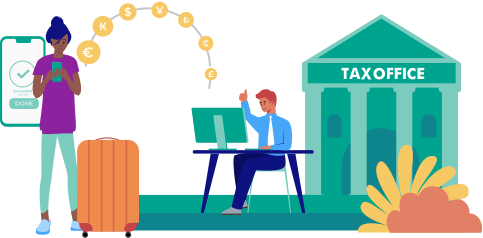
Trippz checks tax rules jurisdiction by jurisdiction against official municipal and national sources. When a rate or rule changes, the update happens automatically rather than on a periodic review cycle. This is the same monitoring that travel platforms and software vendors depend on to stay accurate everywhere they operate.
One tax engine, every market
Send a location, get the applicable rate, instantly and correctly calculated. Travel platforms and property software embed this calculation directly into their own product, so every booking is taxed correctly without building or maintaining a rate engine in house. It is the same logic behind every rate on this page.

Frequently asked questions about Trippz
-
How can platforms and software vendors use Trippz?
Trippz provides tourist tax content and a ready made calculation engine through one API. Platforms and software vendors add accurate tax calculation to their product without maintaining a rate database in house. Guest registration and authority connections are available as a separate capability for those who need it.
-
How does Trippz keep tourist tax rates current?
Trippz checks the jurisdictions it covers against official sources and updates rates automatically when a city or country changes them.
-
Which countries and cities does Trippz cover?
Trippz maintains tourist tax data across a wide range of countries and cities. See the full overview in our tourist tax guides.
-
Is Trippz's data and infrastructure secure?
Yes. Trippz is SOC1 Type 2 and SOC2 Type 2 certified and GDPR compliant, so platforms and software vendors can embed tourist tax calculation without adding security or compliance risk of their own.
-
Who uses Trippz for tourist tax?
Trippz provides tourist tax data and calculation to travel platforms and property software across Europe, including Airbnb, Booking.com and Expedia. The same infrastructure that powers stays booked through the biggest platforms in travel is available to any platform or software vendor through the API.
municipality