Deutsch
 Français
 Italiano
 Nederlands
 Spanish

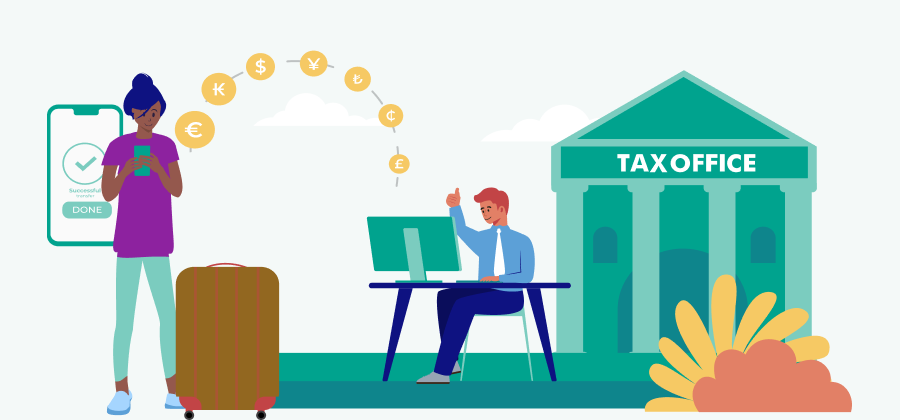
The ten decisions a local authority must make before a tourist tax goes live
Before a tourist tax goes live, a local authority has to take ten decisions. On the rate and what it is charged on. On exemptions, who is answerable, registration, the return, the payment calendar, enforcement, the yield, and the people who run the scheme afterwards. Most authorities discover half of them too late.
This post is an overview of all ten, in the order they have to be taken. Each of them also gets a post of its own on this blog, one every week, so the short version can be read in one pass and the detail found wherever it matters.
1. How a tourist tax rate is set and changed
The authority usually sets it, sometimes within limits set by higher government. Where rates are set regionally, as in Austria and parts of Germany, neighbouring schemes differ, and every one of them needs its own code in the system that calculates the tax.
2. What a tourist tax is charged on
Percentage or fixed amount decides the base. A percentage needs a booking value both sides agree on, including or excluding breakfast, cleaning fees and service charges. A fixed amount needs a category, and categories need a register to fall back on: French rates follow the official classification of the accommodation, so a three-star and a five-star room pay different amounts. This decision reaches furthest into the booking data, because it decides which fields the return has to ask for.
3. Exemptions
Every scheme carries exemptions, and each one is a condition in the calculation and a line in the guidance. Edinburgh charges the levy on the first five nights of a stay, so a ten-night booking pays for five. Several German schemes exempt business travel, long stays and stays for work or study, each on its own test. Children below an age threshold are exempt in many schemes. A rule that cannot be proven by a booking record is a rule that cannot be audited.
4. Who is responsible for charging and remitting the tax
Platforms, managers and owners each hold part of the transaction, and none of them holds all of it. Decide which party is answerable for charging, and what happens when a host charges the wrong amount. A registration system without a named responsible party collects registrations, not tax.
5. How every accommodation provider registers
An online form is the start, not the system. Decide who registers: every host, only larger ones, or platforms on their behalf. Decide what a registration number proves and whether it has to be shown in a listing, which is what makes the register checkable. Decide who checks new registrations and how fast, because hosts arrive every week.
6. What a tourist tax return should contain
Fields are commitments. Every line asked for is a line someone has to fill, validate and store, so keep it to what the scheme needs: nights, guests, rate applied, exemptions claimed, tax collected. Ask for more and the quality of the essentials goes down.
7. How often tourist tax returns and payments are due
Most schemes ask for quarterly returns with payment shortly after. Monthly gives better cash visibility and doubles the workload. A date that falls in a holiday week gets missed, so set the calendar with the same care as the rate and send reminders before the deadline, not after.
8. How a tourist tax is enforced when providers do not pay
Most schemes run the same ladder: reminder, then a percentage surcharge, then a fixed penalty, then recovery from unpaid amounts. Every rung is a rule in the system and a letter that has to go out on time. A ladder that runs on manual follow-up stops at the second rung.
9. What the tourist tax will bring in
Set a realistic expectation before the first return. A percentage of the booking value moves with prices, so it rises with inflation without a decision. A fixed amount stays where it is set while prices move around it. The difference shows in the budget within two years.
10. Who runs a tourist tax scheme after go-live
Registration review, return checks, exemption queries, penalty letters, refund requests and host support arrive from week one. They need staff with a queue and a response time, not a shared inbox. This line goes into the same budget as the rate, and it is the line most often left out.
Policy first, operations second
Decisions one to three shape the tax and belong in the policy phase, alongside the consultation that tests whether hosts can work with them. Decisions four to eight are operational and have to be settled before the first registration opens, because they determine what the registration form, the return and the payment calendar look like. Decisions nine and ten decide whether the scheme survives its second year.
Where Trippz fits in
Trippz handles the operational layer of a tourist tax for local governments. We work with booking platforms on collection, calculate the tax per jurisdiction from the local rules, and handle the filing and payment of government money to the authority. In seven countries, authorities already receive tourist tax from booking platforms through Trippz. The data behind those calculations covers more than 80,000 jurisdictions in over 70 countries, checked against official sources. The platform is SOC1 and SOC2 Type 2 certified, GDPR compliant and hosted in the EU. The mandate stays with the authority: we handle collection, filing and payment, and the authority keeps the decision on the rate and the enforcement policy.
See how Trippz handles tourist tax for authorities. For rates and rules per destination, see the tourist tax guides.